CITIZENS FOR GREAT FALLS
Community Newsletter — Great Falls, Virginia 22066 — Volume 2 • Issue 5 • July 2026 |  | 📋 At a Glance
- Budget: General Assembly adopted Gov. Spanberger's full budget, including a new data center energy tax and record school funding — effective July 1.
- July 4th: Stop by the CFGF tent at the Village Green, 10:30 a.m.–noon.
- Annual Report: CFGF's first-ever Annual Report is out — a year of advocacy on zoning, schools, sanitation, and more.
- Data Centers: Prince William staff now recommend against the 43-million-sq-ft Dulles South data center near Catharpin — Board votes July 7.
- Legislative Roundup: 2027 General Assembly will likely tackle data center water/power/noise and local zoning — start watching now.
- Land Use & Zoning: Lot-by-lot teardowns and infill are quietly reshaping Great Falls' tree canopy and character — no rezoning hearing required.
- Power Blips: Why your lights flicker in storms even after tree trimming, and how to protect your HVAC and appliances.
- Transportation: A new 20 mph speed-limit pilot starts this summer — Georgetown Pike's commercial section didn't make the first phase.
- Great Falls Parkout: A nearly 100-year-old Saturday trash/recycling tradition, run entirely by volunteers — new members welcome anytime.
| BUDGET UPDATE
General Assembly Adopts Final Budget: New Data Center Tax, Record School Funding, $1 Billion Federal Cuts Cushion
All 14 of Governor Spanberger's Amendments Accepted — Budget Takes Effect July 1
Virginia's 2026-2028 budget is now final. The House and Senate met on June 29 and accepted all 14 of Governor Abigail Spanberger's proposed amendments to the budget lawmakers had passed the week before, and the Governor has since signed the bill, which takes effect July 1.
The Headline Item for Great Falls: A New Data Center Tax
For the first time, Virginia will impose a statewide energy consumption tax on data centers, projected to raise up to $600 million a year. State Senator Jennifer Boysko, who represents part of our region, noted in her own budget update that the final package stops short of a Senate proposal to end data centers' sales-tax exemption altogether, and that she has heard from constituents and environmental advocates who feel the budget doesn't go far enough to address data centers' impact on local communities. Both the Governor's office and Senator Boysko's office describe this as a first step, not a final word: the budget also funds a formal study of data center impacts, with further legislation expected in the 2027 General Assembly session.
Other Investments Worth Knowing About
- Education: A record $2 billion in new public education funding, four percent raises for teachers and school support staff, and $577 million for childcare and early childhood programs.
- Federal cuts cushion: Roughly $1 billion set aside across a Medicaid Reserve Fund, a new Federal Contingency Fund, and ACA premium assistance, intended to protect Virginians and state services from federal funding reductions, including cuts to healthcare, nutrition, and education funding.
- Housing and energy costs: $60 million for a new mixed-income housing pilot and the Housing Trust Fund, plus $25 million for energy efficiency and weatherization programs, and a direct RGGI energy credit extended to residential customers, small businesses, and rural electric cooperative customers.
- Paid family leave: Establishment of a new state Paid Family and Medical Leave insurance program, expanding access to paid leave for an estimated 3.5 million Virginians.
- Cannabis market: Authorization of a regulated adult-use retail cannabis market, with stated protections for minors and consumers.
See the Legislative Roundup below for what this means going into the 2027 General Assembly session — the data center tax that just passed is widely expected to be just the opening move on water, power, and noise issues that remain unresolved.
| PRESIDENT'S MESSAGE
Join Us July 4th: Great Falls Marks 250 Years of Independence | 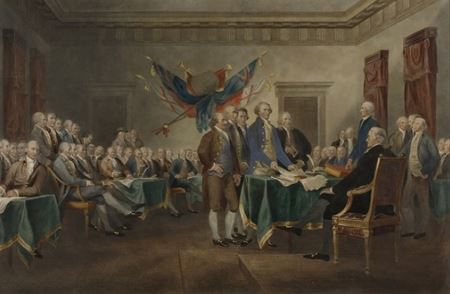 | | The signing of the Declaration of Independence.
Independence Day this year invites us to celebrate not only the freedoms we enjoy, but also the 250-year journey that began with the founding ideals of the United States. Virginia holds a special place in that story, from Richard Henry Lee — a Virginia delegate to the Continental Congress who, on June 7, 1776, introduced the resolution proposing that the colonies declare independence from Britain — to Thomas Jefferson's role in shaping the Declaration itself.
Here in Great Falls, that history is echoed in a hometown tradition that brings neighbors together each July 4th. This year, the 4th of July Hometown Celebration at the Village Green will once again fill Great Falls Village Centre with a parade, community spirit, and family fun, and Citizens For Great Falls will be there with a booth to greet residents and visitors.
For an alternative to the planned outdoor fun this holiday weekend, you and the family can experience the film version of the original Broadway production of Hamilton at the Great Falls Park Visitor Center. Movie showings are Friday, July 3; Saturday, July 4; and Sunday, July 5. All times are 10 AM and 1:30 PM.
Events like this matter because they remind us that Independence Day is not only about honoring the past, but also about strengthening the present. Coming together as a community helps build the connections, trust, and shared purpose that make Great Falls such a special place to live.
As we gather for fireworks, parades, and neighborhood festivities, Great Falls joins communities across Virginia in honoring both our nation's founding and the local traditions that keep that spirit alive. I look forward to seeing you at the Village Green- please have a safe and enjoyable Holiday!
— John Halacy, President
| July 4 CFGF at the Hometown Celebration
Stop By Our Tent on the Fourth! Citizens For Great Falls at the Village Green
Members and friends — come find us at the 4th of July Hometown Celebration! Citizens For Great Falls will have a tent set up at the Village Green from 10:30 a.m. to noon. Stop by to say hello, meet your neighbors, learn more about what we're working on, and enjoy the parade and festivities. We'd love to see you there! | ANNUAL REPORT
A Year in Review: CFGF's Inaugural Annual Report
From the Difficult Run to Data Centers — Our First Year of Advocacy
Citizens For Great Falls has published its first-ever Annual Report, covering July 2025 through June 2026, the organization's founding year. CFGF organized in April 2025, incorporated under Virginia law, and its Board of Directors took office on June 5, 2025. Annual membership dues remain $20. Highlights below; the full report is available now in the Documents Library at citizensforgreatfalls.org. Or, if you are reading this online click this link: 2025 - 2026 CFGF Annual Report.
- Environmental Protection: Pressed DEQ on groundwater monitoring after a 2,600-gallon gasoline spill into the Difficult Run Tributary (case now closed). Now focused on oversight of the 54-mile Potomac Interceptor sewer line after a January 2026 Maryland failure released 243+ million gallons of sewage, and flagged a county proposal to fold EQAC, the Tree Commission, and the Wetlands Board into one new Environmental Commission.
- Land Use & Zoning: Opposed by-right battery storage (BESS) near homes and pushed for 500-foot substation setbacks (Board adopted 100 feet). Opposed the county's 300-plus-page Policy Plan rewrite, adopted in December 2025 over CFGF's objections. Raised concerns on ALU permitting (projecting an 18% rise in subdivision wastewater flow). Also involved in the Grey Gables pickleball dispute and the Lift Me Up! equestrian center approval.
- Transportation & Safety: Advocacy on the Walker Road bridge's high-accident curve and the Georgetown Pike S-curves near Difficult Run. Began documenting a traffic diversion pattern at I-495/Georgetown Pike's Exit 44, and is tracking the new speed-limit pilot alongside rising 2026 accident rates.
- Waste & Sanitation: Helped slow the county's roughly $1 billion Unified Sanitation District proposal by hosting a public forum; deferred indefinitely in August 2025. Criticized a follow-up "HOA Leadership Forum" format as too limited for public input.
- Education & Schools: Pressed for transparency on the School Board's $150 million purchase of the former King Abdullah Academy and on the BRAC boundary-review process (concluded January 2026, no changes to the Langley Pyramid). Submitted a targeted-reductions proposal identifying roughly $30 million in potential savings without touching classroom instruction.
- State Legislative Advocacy: Secretary Jennifer Falcone helped lead the No Fairfax Casino Coalition; the Board adopted formal opposition, though the House passed SB 756 in March 2026. Published a Legislative Scorecard ahead of the 2026 session, and President John Halacy opposed a budget provision that would have repealed Virginia's campaign-finance audit law.
Looking Ahead: Year Two Priorities
Comprehensive Plan/ALU implementation, the Unified Sanitation District, school boundary transparency, the Georgetown Pike speed pilot and Exit 44, Potomac Interceptor rehabilitation and EQAC dissolution, the FY 2027 budget proposal, and casino/data-center policy. We're grateful to every member, volunteer, and board member who made this first year possible. | ANNUAL REPORT
A Year in Review: CFGF's Inaugural Annual Report
From the Difficult Run to Data Centers — Our First Year of Advocacy
Citizens For Great Falls has published its first-ever Annual Report, covering July 2025 through June 2026, the organization's founding year. CFGF organized in April 2025, incorporated under Virginia law, and its Board of Directors took office on June 5, 2025. Annual membership dues remain $20. Highlights below; the full report is available now in the Documents Library at citizensforgreatfalls.org. Or, if you are reading this online click this link: 2025 - 2026 CFGF Annual Report.
- Environmental Protection: Pressed DEQ on groundwater monitoring after a 2,600-gallon gasoline spill into the Difficult Run Tributary (case now closed). Now focused on oversight of the 54-mile Potomac Interceptor sewer line after a January 2026 Maryland failure released 243+ million gallons of sewage, and flagged a county proposal to fold EQAC, the Tree Commission, and the Wetlands Board into one new Environmental Commission.
- Land Use & Zoning: Opposed by-right battery storage (BESS) near homes and pushed for 500-foot substation setbacks (Board adopted 100 feet). Opposed the county's 300-plus-page Policy Plan rewrite, adopted in December 2025 over CFGF's objections. Raised concerns on ALU permitting (projecting an 18% rise in subdivision wastewater flow). Also involved in the Grey Gables pickleball dispute and the Lift Me Up! equestrian center approval.
- Transportation & Safety: Advocacy on the Walker Road bridge's high-accident curve and the Georgetown Pike S-curves near Difficult Run. Began documenting a traffic diversion pattern at I-495/Georgetown Pike's Exit 44, and is tracking the new speed-limit pilot alongside rising 2026 accident rates.
- Waste & Sanitation: Helped slow the county's roughly $1 billion Unified Sanitation District proposal by hosting a public forum; deferred indefinitely in August 2025. Criticized a follow-up "HOA Leadership Forum" format as too limited for public input.
- Education & Schools: Pressed for transparency on the School Board's $150 million purchase of the former King Abdullah Academy and on the BRAC boundary-review process (concluded January 2026, no changes to the Langley Pyramid). Submitted a targeted-reductions proposal identifying roughly $30 million in potential savings without touching classroom instruction.
- State Legislative Advocacy: Secretary Jennifer Falcone helped lead the No Fairfax Casino Coalition; the Board adopted formal opposition, though the House passed SB 756 in March 2026. Published a Legislative Scorecard ahead of the 2026 session, and President John Halacy opposed a budget provision that would have repealed Virginia's campaign-finance audit law.
Looking Ahead: Year Two Priorities
Comprehensive Plan/ALU implementation, the Unified Sanitation District, school boundary transparency, the Georgetown Pike speed pilot and Exit 44, Potomac Interceptor rehabilitation and EQAC dissolution, the FY 2027 budget proposal, and casino/data-center policy. We're grateful to every member, volunteer, and board member who made this first year possible. | DATA CENTER DEVELOPMENT NEWS
Update: County Staff Recommend Against Dulles South Data Center — Board Vote Set for July 7
A massive data center proposal heading to a vote on July 7 is technically a Prince William County matter — but its consequences reach well beyond the immediate area, including into parts of Fairfax County that might not expect to be touched by it. As the meeting date approaches, the county has now published its agenda and a staff recommendation that breaks sharply against the project.
Breaking: Staff Recommend the Board Not Move Forward
The Prince William County Board of County Supervisors has posted its July 7 agenda, including a draft resolution (Item 11.D) recommending the Board decline to initiate Comprehensive Plan Amendment #CPA2026-00012 altogether — the first procedural step the project needs. Staff cite inadequate water, sewer, and transportation capacity; environmental impacts and loss of rural character; and incompatibility with surrounding Agriculture and Forestry land.
Important caveat: A staff recommendation isn't final. Boards can and do vote against staff, and the applicant is expected to make its case at the meeting. The July 7 vote is what matters.
Whose decision: Goes before the Prince William Board of County Supervisors, not Fairfax's. Fairfax's Board has taken no public position, though the site sits right where Prince William, Fairfax, and Loudoun meet.
- The scale: Along Sanders Lane in Catharpin — roughly 1,940 acres, up to 43 million square feet of data center buildings, nearly double the PW Digital Gateway.
Why Southwestern Fairfax County Should Care
- Shared drinking water: The site drains into the Occoquan Reservoir, which supplies drinking water to much of Fairfax County. Forty-three million square feet of buildings and substations means major new impervious surface and runoff risk.
- Air quality: Prevailing winds run west to east, carrying construction dust, generator exhaust, and potential gas turbine emissions toward a region already near air-quality limits.
- Direct neighbors: Fairfax communities near Manassas Battlefield — Virginia Run, Stonebridge Chase, Fairfax National Estates, Jillians Forest, Pleasant View, Sully Estates, Sudley Farm, Bull Run Estates — sit close by, as does Park Authority land in Sully Woodlands.
Why It Reaches Dranesville and Hunter Mill Too
- The electric bill: Virginia law lets utilities recover new transmission and substation costs from the entire ratepayer base. Dominion's Edsall Substation, built for one 176-megawatt data center, cost roughly $23 million system-wide, and Dominion has roughly 200 similar projects planned over 15 years as demand triples by 2040 — capacity every Fairfax customer helps pay for on a shared grid.
- The corridor effect: Reston/Herndon (Hunter Mill) sit at the edge of Loudoun's Data Center Alley; Dulles South extends that corridor into Prince William. Each bigger approval — Digital Gateway, then double that here — resets the baseline for the next proposal, including ones closer to Fairfax's own line.
The developer's project website leans on space-and-AI branding with little concrete mitigation detail; see https://www.dullessouthic.com. Cooley LLP reportedly represents the applicant.
Bottom line: Staff has recommended against this project, but the Board makes the final call on July 7. If you want this stopped, now is the time to make that known to the Prince William Board of County Supervisors.
| 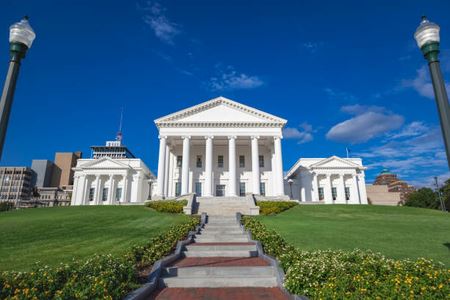 | | The Virginia State Capitol in Richmond.
2027 General Assembly: An Early Warning for Great Falls
The Virginia General Assembly will not convene until January, but Citizens For Great Falls members should start paying attention now. Fairfax County already hosts a significant share of Virginia's data center industry, and four concerns tied to that growth are gaining traction in Richmond:
- Water: Many data centers rely on water-intensive cooling, raising depletion fears. The budget that just passed addressed energy use, not water directly, but funds a formal impact study; both the Governor's office and General Assembly members have signaled water is on the table for 2027, likely including metering and disclosure requirements.
- Energy: Explosive electricity demand is straining the grid and reviving the fight over who pays for new transmission — ratepayers or the industry. The new energy tax addresses one piece, but the cost-allocation debate for transmission and substation buildout, covered in our Dulles South story above, remains open.
- Noise: Residents near existing Northern Virginia data center campuses have complained about constant cooling and generator hum audible beyond property lines. Expect legislation on noise standards, setbacks, and disclosure as more facilities are proposed near homes.
- Local zoning authority: Lawmakers have floated bills requiring counties like Fairfax to allow small-lot homes, duplexes, and townhouses by right in single-family zones. Stalled in 2026, expected to return — worth watching for a community built around large lots.
Other fights quietly returning include collective bargaining for local government employees, the proposed Tysons casino, Northern Virginia transportation funding, and retail cannabis sales, now delayed until July 2027. Fairfax's Board of Supervisors typically releases its draft legislative program each fall with public hearings ahead of December adoption — the best window to weigh in before bills are drafted in Richmond.
Citizens For Great Falls will track these issues and let members know when action is needed. For now, consider this your early warning: 2027 could be a consequential year for water, power, and quiet in Great Falls.
| LAND USE & ZONING
Great Falls' Quiet Pressure Point: Infill Development and the Future of Our Tree Canopy
Drive down almost any street in Great Falls long enough and you'll pass it: a lot that, not long ago, sat shaded behind a deep tree line, now stripped to dirt and sod with a much larger house filling most of the buildable envelope. No rezoning case. No public hearing. No vote. Just a permit, a demolition crew, and a property that looks nothing like it did before.
This is Great Falls' quiet pressure point: small-scale infill and teardown-rebuild development, happening one lot at a time. It rarely makes a Board of Supervisors agenda, and no single project ever looks big enough to fight. But for a community defined by its wooded setting, larger lots, and rural feel, this lot-by-lot churn may matter just as much as any major rezoning — precisely because it's so easy to overlook.
What's Actually at Stake
The concern isn't that homes are changing — homes always change. It's what tends to go with that change: mature trees removed, green buffers thinned, impervious cover expanded, and the visual rhythm that makes Great Falls feel like Great Falls quietly worn away. Even a fully compliant project — one that checks every box in the zoning ordinance — can still leave residents feeling like something irreplaceable was lost. That gap between what's permitted and what's preserved is the real fight here.
Why It Adds Up
A single redevelopment can look minor in isolation. But these projects don't happen in isolation — they happen across hundreds of lots, year after year, and the effects compound: altered drainage, lost privacy, a different roadside appearance, a creeping sense of enclosure replacing openness. And unlike most planning fights, this one comes with a one-way door. Once mature trees are cut and a lot is built out to its edges, no ordinance, no mitigation plan, and no amount of landscaping brings back what took decades to grow.
The Real Question
The larger question for Great Falls isn't whether change happens — it's whether change happens on our terms. That means staying engaged on site design, tree preservation requirements, setbacks, and stormwater controls, and watching closely for any policy shift that touches lot-by-lot redevelopment. It also means recognizing that "preservation" in Great Falls isn't only about historic structures or large protected tracts — it's also about hundreds of ordinary, individually unremarkable decisions made on individual parcels, permit by permit.
Staying Vigilant, Not Reflexively Opposed
Great Falls doesn't need to oppose every teardown or every new build to protect its character. But it does need to stay alert to the kind of change that happens quietly, incrementally, and permanently — the kind that never trips a rezoning hearing but adds up to something irreversible. In a community built around its landscape, losing mature trees and open space one lot at a time isn't just a design question. It's a community question.
Noticed a redevelopment in your neighborhood that concerns you? Let us know — these are exactly the patterns CFGF wants to start tracking. | COMMUNITY IMPACTS (POWER BLIPS)
Why the Lights Flicker During Storms — And Why It's Still Happening Even With All That Tree Trimming
It's that time of year again — if you live in Great Falls, you've probably seen this during a storm: the lights blink off and on three times fast, then either stay on or go out completely. That's not random — it's Dominion's equipment automatically trying to fix the problem before it knocks out your power for good.
Here's the frustrating part. Dominion has been running an aggressive tree-trimming program in our area for years, and many residents still feel like the blinking and outages happen just as often as before. We hear this from neighbors constantly, and it's a fair question to ask: if crews are cutting back limbs all the time, why are we still losing power so much?
What's Actually Happening
When a tree branch brushes a power line, or lightning strikes nearby, it creates a brief short. To deal with this, Dominion's equipment automatically shuts the power off and back on — up to three times in a few seconds — to see if the problem clears itself. Each one of those tries is a "blip." It's a deliberate safety feature, not a malfunction. The goal is to avoid a full outage that would take hours to fix.
Why Great Falls Gets Hit So Often
Even with regular tree trimming, Great Falls is naturally one of the toughest areas in Fairfax County for the power grid to handle. We have heavy tree cover along roads like Georgetown Pike, Old Dominion, and Walker Road, plus the Difficult Run stream valley. Our neighborhoods are also served by long stretches of line with few backup routes, so one tree limb or one lightning strike in the wrong spot can affect a lot of homes at once. Trimming helps, but it can't eliminate the risk — branches grow back, storms get more intense, and there's only so much crews can cut without removing healthy trees people want kept.
What These Blips Can Do to Your Home Equipment
Most things in your house can handle a quick blip just fine. A few things are more sensitive:
- Air conditioning / heating units (HVAC): A fast off-on cycle can force the compressor to restart while it's still under pressure, which can trip it offline or wear it out faster.
- The control board in your HVAC system: This is the small "brain" that runs your thermostat signals. It's sensitive to power blips and can blow a tiny fuse — this is likely why some neighbors' systems stopped working after the last storm.
- Refrigerators and freezers: These usually have a built-in delay that protects them, but repeated blips can still cause hiccups.
- Well pumps and sump pumps: These can stall or shut themselves off as a safety measure, especially during heavy rain when they're already working hard.
What You Can Do to Protect Your Home
- Install a whole-house surge protector to guard against lightning-related spikes
- Ask your HVAC company about a "hard-start kit" to ease the strain on your compressor
- Consider a low-voltage protection device that keeps your HVAC offline for a moment until power stabilizes
- Use a battery backup (UPS) for routers, computers, and smart thermostats
- Have your HVAC system checked after a storm if it blows a fuse or starts acting strange
Why We're Sharing This
Understanding how the grid behaves — and why tree trimming alone hasn't solved the problem — helps us advocate more effectively for better infrastructure in Great Falls. It also helps residents protect their own homes in the meantime. As storms keep getting more frequent and intense, these power blips aren't going away soon. Knowing what to expect, and taking a few precautions now, can save you a repair bill later. | 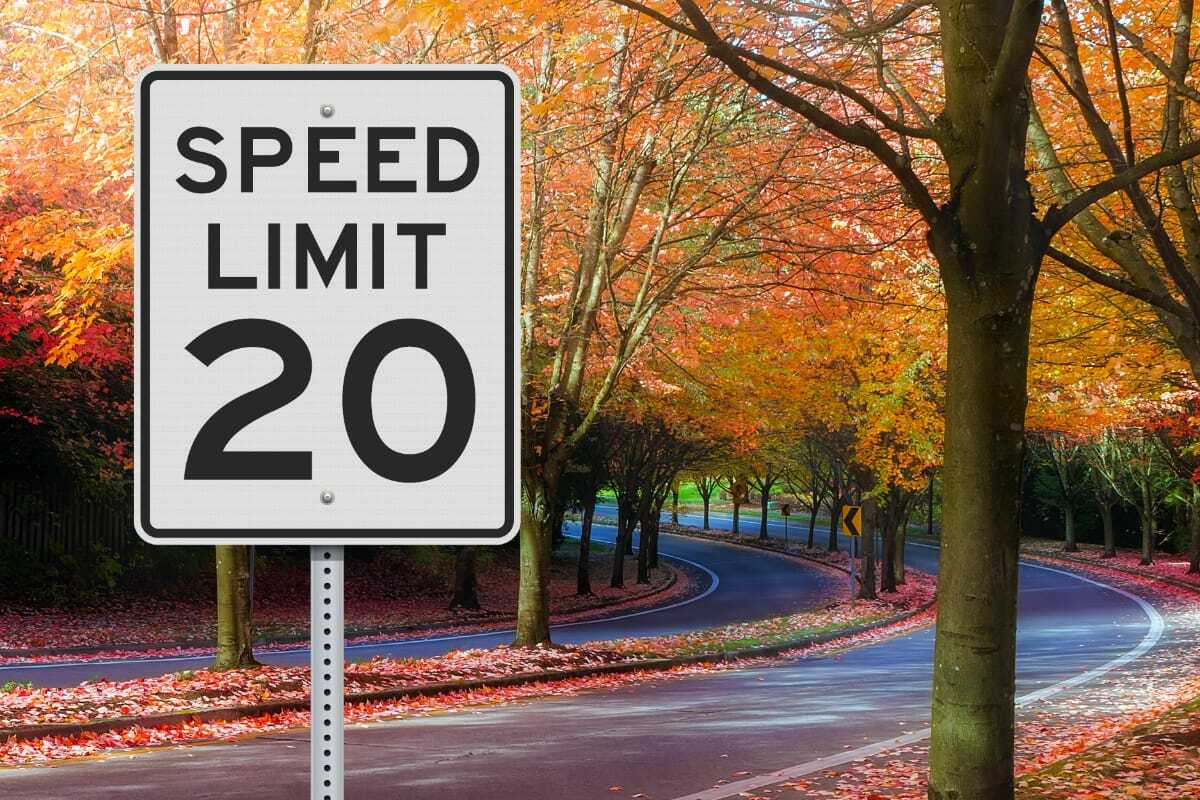 | | A 20 mph speed-limit sign now posted on streets in the pilot program.
(Image via Fairfax County)
TRANSPORTATION
Fairfax County Tests Lower Speed Limits — But Not Yet on Georgetown Pike
A new Virginia law is giving Fairfax County more power to slow traffic down, and Citizens For Great Falls wants members to know where Great Falls currently stands in that effort.
In 2024, the General Assembly granted local governments the authority to lower speed limits on roads in business or residential districts where the posted limit is currently 25 mph, to as low as 15 mph. The Board of Supervisors' Transportation Committee, chaired by Dranesville District Supervisor Jimmy Bierman, directed county staff that October to develop a pilot program testing the change. The full Board did not formally approve the ordinance authorizing the pilot until June 9, 2026, voting 10-0 to move forward.
The Fairfax County Department of Transportation (FCDOT), working with each Board of Supervisors office, identified streets for the first phase of the pilot in the Dranesville, Hunter Mill, Mason, and Providence districts. In Dranesville, which includes Great Falls, the designated streets are Douglass Drive, Baron Road, and Ingleside Avenue, all located near McLean.
The pilot is set to run from this summer into early 2027, lowering speeds on those roads to 20 mph while FCDOT collects data on traffic speed, volume, and public feedback.
Citizens For Great Falls had asked Supervisor Bierman directly to consider the commercial section of Georgetown Pike through the Village Centre, where the posted speed limit is already 25 mph, for inclusion in the pilot. That request was not accepted. FCDOT's official list of designated streets for this first phase does not include Georgetown Pike's commercial section.
We believe the stretch of Georgetown Pike through the village deserves consideration. It is a commercial corridor with pedestrian activity, parking, sidewalks in places, and steady foot traffic to local shops and the library — the same kind of conditions FCDOT says it is looking for in other parts of the county.
FCDOT has indicated the pilot will expand to additional districts and streets in a second phase, with a final timeline still to be determined. That gives Citizens For Great Falls, and the broader Great Falls community, another opportunity to make the case for our village center.
Members who want to see Georgetown Pike's commercial section included in a future phase should let us know, and consider following up with Supervisor Bierman's office and FCDOT directly as the second phase takes shape. We will keep members updated as the pilot program develops and additional opportunities for input open up. | 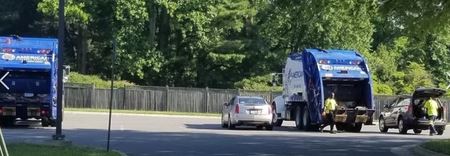 | | Great Falls Parkout, in action on a Saturday morning at Great Falls Elementary school.
GREAT FALLS PARKOUT
A Community Treasure, Built One Saturday at a Time
Every Saturday morning, while most of the country is still hitting snooze, a quiet kind of magic happens at Great Falls Elementary School. Trucks roll in. Neighbors wave. Trash and recycling disappear. And for nearly a century, that simple ritual has held this community together in a way no government program ever could.
Meet Great Falls Parkout — proof that the best solutions are sometimes the ones neighbors build for themselves.
Nearly 100 Years and Counting
Great Falls Parkout has been quietly serving local families since the 1930s, making it one of the longest-running community traditions in the area. It's a volunteer-led trash and recycling drop-off service that has survived wars, recessions, and decades of change for one simple reason: it works, and it's run by people who genuinely care about keeping their community clean.
How It Works
The routine is refreshingly simple. Every Saturday, rain or shine, from 8 a.m. to noon, members pull up to Great Falls Elementary School and drop off as many loads of trash and recycling as they need. Attendants handle the heavy lifting, volunteers keep things running smoothly, and what could be a chore becomes something closer to a community check-in.
A Model of Self-Reliance
Here's what makes Parkout truly remarkable: it runs entirely on its own, with no county subsidy propping it up. It exists because residents choose to support it — year after year, Saturday after Saturday.
That independence was put to the test in 2004, when Fairfax County ended its own parkout operations. Rather than let the service disappear, a new nonprofit stepped up to keep it alive. Two decades later, it's still going strong — a testament to what happens when a community decides something is worth saving.
Built for Great Falls
Parkout isn't just convenient — it's a smart fit for the place it serves. Great Falls' narrow, semirural roads aren't built for the heavy trucks that curbside pickup requires. Parkout offers a lighter-footprint, lower-cost alternative that keeps big trucks off local streets, which means less wear on the roads and a quieter, cleaner neighborhood for everyone.
A Tradition Worth Joining
What sets Parkout apart isn't just what it does — it's how long it's done it, and who's been doing it. This is volunteerism at its best: practical, lasting, and woven into the everyday rhythm of the community. New members are always welcome, and joining is as easy as showing up on a Saturday morning.
Nearly 100 years in, Great Falls Parkout remains a model for what neighbors can build when they simply decide to show up for each other. It's not flashy. It doesn't need to be. It just works — and that's exactly the point.
Want to join Great Falls Parkout? New members are always welcome. Learn more and get started at www.greatfallsparkout.com. |  | CFGF is dedicated to preserving the character, quality of life, and community values of Great Falls, Virginia.
www.citizensforgreatfalls.org
Email us at: CitizensforGreatFalls@gmail.com
You are receiving this newsletter as a member or subscriber of Citizens for Great Falls.
To unsubscribe, please manage your preferences through Club Express. | |